 by
by Vibia Perpetua was a young noblewoman from Carthage who in 203 AD was sentenced to execution in the arena alongside four other catechumen as they were preparing for baptism.
Carthage was part of the African territory of the Roman Empire in the third century, a leading sea port on the Mediterranean and as Augustine later noted, a city with a divided soul — one side obsessed by man and his lusts and the other filled with Christian longings and a rising Christian movement . These two often clashed as they did in 202 when Septimius Severus, the first emperor of Rome from Africa, made conversions to Christianity and Judaism illegal and punishable by death. Ackermann et al (2019) connects this decree to attempts to strengthen the state through religious harmony. Refusal by Christians to follow this policy began the fifth persecution of Christians that led to the arrest and death of a young noblewoman named Perpetua and her family of catechumen. Rollins (2024) identifies the other catechumen as Felicitas, Revocatus, Saturninus and Secundulus.
The Romans periodically persecuted Christians, whom they accused of being antisocial, atheists and unpatriotic because of their refusal to sacrifice to Caesar or participate in rituals to Roman gods. Persecution of Christians was, however, not systemic or widespread but often abrupt and local, targeting church leaders. At around 155 AD, the word martyrdom entered Christian vocabulary to exclusively signify a believer who suffers and dies for their faith. This is opposed to the “confessor”, who was merely a witness.
Early Christians not only expected suffering but also welcomed it. Suffering was imitation of Christ in his life and death and teachings (Matt 5:10-12; 10:24; Mk 10:29-30; Jn 15:19-20; 16:2, 33; 1Thes 3:3–4; 1 Pt 4:16; Rev 2:10-11). In time belief grew that the most admirable way to die was through suffering and death, just like Jesus (Bisconti et al, 2014; McFarland et al, 2011) and that it was a calling for some (Ferguson, et al, 2011; Polkinghorne, 2024; Shaw, 2016). The central point of each martyr act was the confession, ‘I am a Christian’ (Bixler, 1990).
The enthusiasm for death among early Christians was driven by Christ’s words that publicly identifying with Him guaranteed a place in glory (Matt 10:32–33) and the belief that Christ was actually present during their torment (Bixler, 1990). Those in prison awaiting martyrdom were said to possess gifts of gifts of prophecy, visions and power to heal and forgive sins, their authority rivalling that of bishops. This eventually leading to a cult of martyrs, with the graves of those killed for their faith in Christ being used as meeting places for worship and importance attached to relics and their intercessions.
Perpetua and Felicity
Perpetua was 22 years old, well-educated and still nursing her infant son when she was arrested and held in a dark, hot and crowded dungeon. From here she kept a diary of what was happening to her, with her servant Felicitas and with other catechumen after their arrest. A narrator takes over her diary later as Perpetua and her group faces a terrible death by beasts in the amphitheater under proconsul Hilarianus.
The account, titled the “The Passion of Perpetua and Felicitas”, is the oldest surviving Christian writing known to have been penned by a woman (Polkinghorne, 2024). The first eight chapters are written in first person which the narrator says are the work of Perpetua herself “just as she wrote with her own hand and according to her own perception”. The final part, as told by the narrator, includes scenes of her execution as part of the celebrations for the birthday of Caesar Geta, the son of the emperor Severus. Her account grew in popularity in subsequent centuries until Perpetua and Felicitas became venerated in Rome by the mid-fourth century. Her diary entries were read annually in Carthage’s churches for centuries and their strength of faith is celebrated on March 7 in Western traditions and Feb 1 in Eastern orthodoxy. Archaeologists in 1907 identified a basilica that was built on their burial site.
Women martyrs in the early church
Perpetua shares her story as a woman, a mother, sister and daughter, aptly and movingly capturing the female experience. After her arrest, she narrates her deep concern for her child, who had been “weak with hunger” without his mother. When she is later allowed to keep the boy with her she writes: “The presence of the child meant that, prison was immediately transformed into a palace for me, so that I preferred to be there than anywhere else.” After she is sentenced to die by wild animals in the amphitheater, she is filled with anguish for her child. But God intervenes. “And just as God willed it, the baby no longer wanted my breasts nor did they cause me pain, so that I was not tortured by worry for my son nor by aching in my breasts.” Meister & Stump (2010) observe this concern as unusual in accounts of Christian holy women from that era. Perpetua’s love for her child is without doubt but what’s moving is a higher devotion to Christ, above her calling as a mother.
Her courage and free spirit is seen in the fact that her status as a woman did not support her religious choice. She was expected to worship the gods of her father and husband (Rollins, 2025). Early accounts do not mention her husband although her choice to become a Christian was still a high-risk decision since her father did not approve.
Perpetua writes about the faith of her slave girl Felicitas, who was heavily pregnant at the time of their imprisonment. Committed to dying with the others, Felicitas asks the group to pray that she goes into early labor. Indeed she gives birth to her daughter at eight months, who is given up for adoption to a Christian woman. Felicitas’ childbirth is so difficult that the prison guard asks her how she will handle the beasts in the amphitheatre if giving birth was so hard. Felicitas is recorded to have responded: “Now I suffer what I suffer: but then another will be in me who will suffer for me, because I too am to suffer for him”.
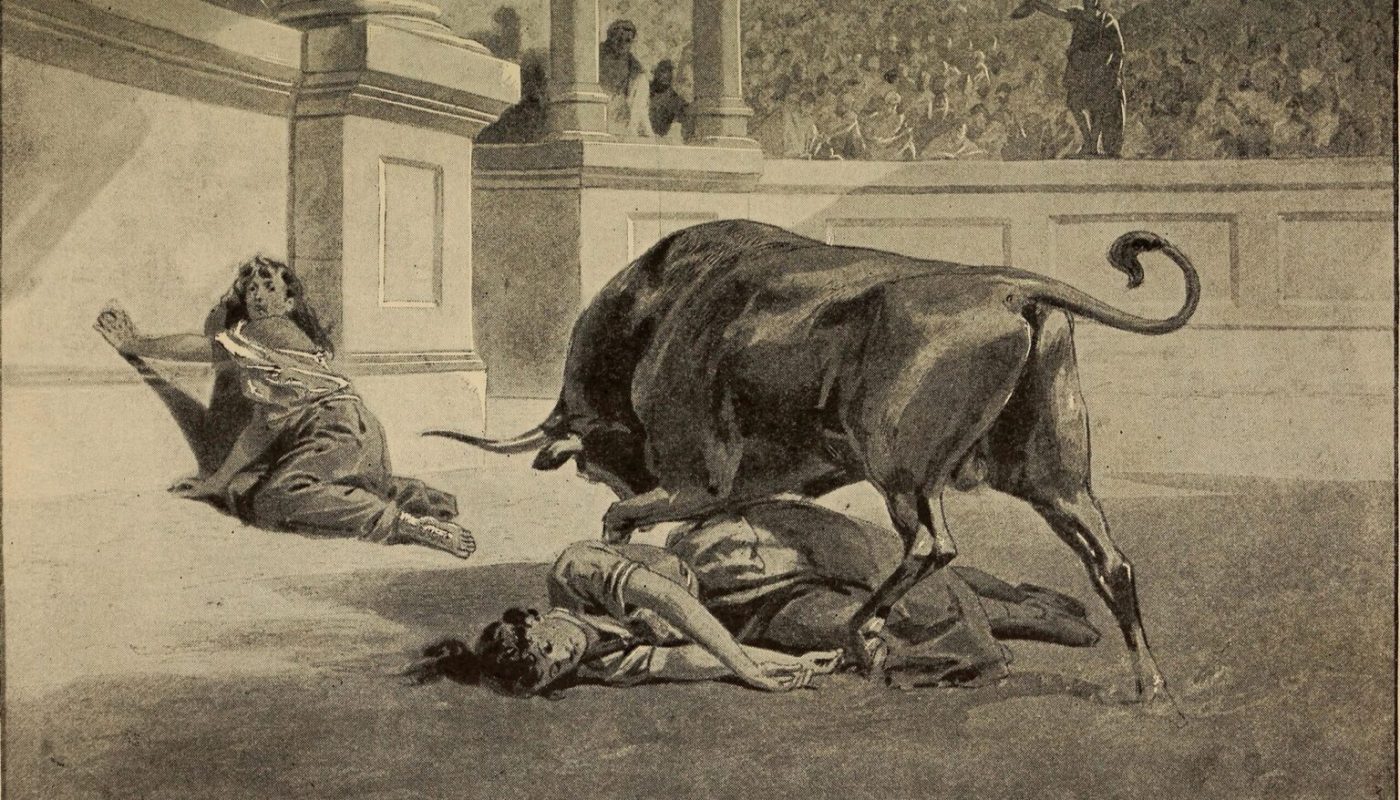
Ruden (2025) explains that women martyrs were put on display as sexual objects. The narrator describes how the women are stripped for the arena and covered with nets, then brought to the amphitheater to meet a mad heifer. The crowd is horrified when they see the naked bodies of a delicate young girl and a woman fresh from childbirth with the milk still dripping from her breasts. They are taken back in and dressed in unbelted tunics. Polkinhgorne, (2024) opines that Perpetua and Felicity are honored not just as women who voluntarily suffered for their faith, but as mothers who did so, their devotion to Christ amplified in their maternal longings, their love for God demonstrated by their willingness to give up everything they held dear, even their children.
Family love
Of her mother and brother Perpetua writes: “I was in pain because I saw them suffering out of pity for me.” The accounts shows the deep love of a father, who says he loved Perpetua even above her siblings, and afterward incessantly begs her to renounce Christ. He throws himself at her feet, kissing her hands and begging, “Daughter, have pity on my grey head… Do not abandon me to be the reproach of men. Think of your brothers; think of your mother and your aunt; think of your child, who will not be able to live once you are gone. Give up your pride! You will destroy all of us! None of us will ever be able to speak freely again if anything happens to you.” But she tells him, “I cannot call myself anything but what I am, a Christian.”
In last ditch efforts her father confronts her with her infant son at her hearing before the governor and begs her to perform the sacrifice for the welfare of the emperor. Hilarianus the governor also tells her, “Have pity on your father’s grey head; have pity on your infant son.” When the governor has father flogged, Perpetua writes: “I grieved for my father’s situation as if it were me who had been beaten, I grieved for him in his wretched elderly state.” One of her prison visions is of her brother who died as a child. Her concern for him leads her to intercession for him. Meister & Stump (2010) note that the attention Perpetua’s account gives to her family and their suffering is unusual, which gives insight into her as a person.
Joy in suffering
Despite being young in faith, Perpetua stands her ground with joy. Of her dungeon at first she writes: “I had never felt such darkness. O terrible day! O the fierce heat of the shock of the soldiery, because of the crowds!” But once her child is brought to her she says the dungeon was transformed into a palace where she wanted to be rather than anywhere else.
When Perpetua and the rest of the group are condemned to the beasts, she writes of how they went back down to the jail in in high spirits. The narrator refers to the day of their death as the day of victory, when “they are marched from the prison to the amphitheater joyfully, as though they were going to heaven, with calm faces, trembling, if at all, with joy rather than fear.” Perpetua is described as “one with a shining countenance and calm step, as the beloved of God, as a wife of Christ, putting down everyone’s stare by her own intense gaze”.
At the amphitheater as the enraged crowds demand that they be scourged before a line of gladiators Perpetua sings a psalm as the martyrs rejoice that they had obtained a share of the Lord’s sufferings. She displays grace in death. As the heifer charges and rips their unbelted tunics, she moves to cover her thighs. When her hair is falling down, she asks for a pin to put it back up “for it was not fitting for a martyr to suffer with disheveled hair, or she might seem to be mourning in her moment of glory.” Eventually, when the group is brought to the middle of the arena to die by the sword, some receive the sword with silence but the narrator writes that Perpetua shouts in triumph. “She herself brought the slipping hand of the inexperienced gladiator to her throat. Perhaps so great a woman could not otherwise be killed, who was feared by the unclean spirit, unless she wanted it.”
Visions and spiritual warfare
While in prison, Perpetua’s brother encourages her to use her privilege as a confessor awaiting execution to ask God for a vision on her fate. “Faithfully I promised that I would, for I knew that I could speak with the Lord, whose great blessings I had come to experience,” she writes. Perpetua tells of four visions over the period of her stay in prison. In the first, there was a bronze ladder reaching up to the sky. The ladder was so narrow only one person could climb at a time, and the sides were embedded with knives and swords. Under the ladder lay an enormous dragon, terrifying all who tried to climb. Her friend, Saturninus, went up the ladder first, warning her of the dragon: “Perpetua, I’m holding on for you; but be careful not to let that dragon bite you.” She said: “He won’t hurt me, in the name of Jesus Christ”, and stepped on his head and climbed up. At the top she found herself in an immense garden, where a white-haired man dressed as a shepherd and surrounded by many thousand white-robed ones called her ‘daughter’, welcomed her and offered her some of the milk, which she drank to the sound of a thousand “amens” that awoke her, “still tasting a sweetness which I cannot describe”. She and her brother understand that she would die. “And we ceased henceforth to have any hope in this world.”
Her second and third visions are of her brother Dinocrates who died as a child. She sees him coming out of a filthy place and looking sickly and thirsty, with a wound on his face, which he had when he died of cancer at seven. They are separated from one another by a great distance. She prays on his behalf day and night that his suffering may end and in the next vision Dinocrates is clean, healed from his illness, happy like a child and a pool of water has been lowered so he could drink his fill (Tertullian, n.d). Perpetua understood this to mean Jesus had delivered her brother from the place of punishment.
Her final vision is on the night before her death. It’s the scene of a gladiatorial contest where the winner gets a green branch with golden apples. Apples were the prize in Apollo’s games at Carthage. Perpetua fights an Egyptian in the arena as a man, stepping on his head as her supporters sing praises. She receives the branch and the gladiatorial trainers kisses her and days: “Daughter, peace be with you.” Ruden (2025) highlights that the church often ignores her second and third visions because they do not align with its social doctrine. The visions show Perpetua’s understanding of persecution as spiritual warfare against the powers of hell itself and assure her of triumph in the arena. The world view for the early church was that persecution and martyrdom was a point of cosmic conflict against the devil and his legions and earning one a place immediately in heaven. Bixler (1990) explains that Christians freely appropriated the language of gladiatorial and athletic contests to describe their spiritual bouts with evil, referring themselves to athletes of religion and the trophies won from demons.
Christian community
Perpetua’s tale develops the idea of a spiritual family coming to take the place of birth family. There’s her bother who encourages her to pray for a vision; then Saturus, one of the group and their encourager, who is looking from the top of the ladder and urging her on: “Perpetua, I am waiting for you. But take care; do not let the dragon bite you.” There is the family of catechumens praying with Felicitas and the deacons Tertius and Pomponius who take care of the catechumens, even paying soldiers to allow them access a better part of the prison to refresh themselves for a few hours.
In her final vision on the night before her death, she see the deacon Pomponius leading her to the middle of the arena with the words: “Do not be afraid: I’m here with you and I’m struggling with you.” In the arena, she and Felicitas face the heifer, side by side. Then in her final moments, Perpetua calls for her brother to encourage him: “You must all stand fast in the faith and love one another, and do not be weakened by what we have gone through.”
Eschatological courage
Shaw & Gitau (2021) observe that Perpetua’s freedom could have been secured easily with a pinch of incense to the Roman gods. But against the impassioned pleas of her father and in the face of her child, Perpetua faces the Roman governor and declares herself a Christian. To her father she says, “It will all happen in the prisoner’s dock as God wills, for you may be sure that we are not left to ourselves but are all in his power”. As they are sentenced to the beasts, they warn their human persecutors that they too would in turn be judged by God.
The martyrs embraced their fate as something higher, identifying with gladiators and as stars of the game. It is notable how they remain dignified in undignified circumstances, not trembling in the face of death, not quiet when intimidated. As they are matched down the arena, they refuse to dress like pagan priests. “We came to this of our own free will, that our freedom should not be violated,” Perpetua says. The military tribune agrees that the group be brought into the arena just as they are.
The story ends with Perpetua and Felicitas being trampled upon by a mad heifer while the other catechumen faced beasts. After being brutalized by the animals, the surviving Christians gather together, give each other the kiss of peace one last time and then bravely face the gladiator’s sword. Perpetua is remembered for famously guiding the hand of a nervous gladiator to her own neck, willingly embracing death.
A story of women’s faithfulness
Tertullian famously said: ‘The blood of the martyrs is seed for the Church.’ The tale of Perpetua, Felicitas and their fellow prisoners became a favorite for the early church, encouraging faithfulness and courage in the face of persecution. She gave up wealth, freedom, family, safety and life itself for the sake of Christ. Many people who witnessed such courage, faithfulness and inexplicable joy in suffering became believers. A Greek version of the hagiography from the fifth or sixth century was discovered in the late 19th century in Jerusalem, proof that Perpetua’s story must have been considered so important it needed to be made accessible to the Greek-speaking communities of the eastern empire.
Her tale also stands out because she may have written much of it herself. Because ancient documents were rarely written from the female perspective, a document regarding persecution and martyrdom from a woman was a treasure amongst ancient prose. The Passion of Perpetua and Felicitas “uniquely, it is a story of women’s faithfulness from the women themselves” (Rollins, 2025) and could have inspired other women writers like the fourth century Egeria, whose letters contain the oldest known description of a pilgrimage to the Holy Land.
References
Ackermann, M. E., Schroeder, M. J., Terry, J. J., Upshur, J.H. L., & Whitters, M. F. (Eds.). (2016/2019). Septimius Severus. In World history: A comprehensive reference set. Facts On File/Credo Reference. https://credoreference.com/entry/worldhis/septimius_severus
Bixler, W. G. (1990). How the early church viewed martyrs. Christian History Institute. https://christianhistoryinstitute.org/magazine/article/how-early-church-viewed-martyrs
Davenport, C., & McEvoy, M. (2024). Hidden women of history: Saint Perpetua, a young mother put to death in a Roman amphitheatre. The Conversation.
Ferguson, E. (1990). Persecution in the early church: Did you know? In Christian History (Issue 27). Christianity Today / Christian History Institute. https://christianhistoryinstitute.org/magazine/article/persecution-in-the-early-church/
Felker Jones, B. (n.d.). Called first to Christ. Christian History Institute. https://christianhistoryinstitute.org/magazine/article/called-first-to-christ
Flinn, F. (2016). Encyclopedia of world religions: Encyclopedia of Catholicism. Facts On File.
Haddad, M. (2025). Women writers in early Christianity: Their courage, leadership, and legacy. Mutuality. https://www.cbeinternational.org
McFarland, I. A., Fergusson, D. A. S., Kilby, K., & Torrance, I. R. (Eds.). (2011). The Cambridge dictionary of Christian theology. Cambridge University Press.
Meister, C., & Stump, J. B. (2010). Christian thought: A historical introduction. Routledge.
Perpetua et al. (n.d.). From the archives: The martyrdom of Perpetua. Christian History Institute. https://christianhistoryinstitute.org/magazine/article/women-archives-martyrdom-of-perpetua
Polkinghorne, K. (2024). Martyrdom and motherhood: Perpetua and Felicity. Mutuality.
Quinn, F. (n.d.). Felicitas et Perpetua. Dictionary of African Christian Biography. Retrieved January 29, 2026, from https://dacb.org/stories/tunisia/felicitas-perpetua/
Rollins, M. (2025). The martyrdom of Perpetua and Felicitas. Priscilla Papers, 39(2). https://www.cbeinternational.org/wp-content/uploads/2025/04/TheMartyrdomOfPerpetuaAndFelicitas.pdf
Ruden, S. (2025, October 21). The inverse wisdom of a second-century martyr [Interview]. The Christian Century, 142(11), 70–73.