 by
by I was reading Moses’ burning bush experience in Exodus 3. This was Moses’ first personal encounter with God when he was about 80 years old. Up to this time, Moses had experienced the sovereignty of God over him but his spiritual eyes of understanding had not yet been opened. As a Bible reader, you are given the backstory of Moses’s life. You see him born at a time when the Israelites were slaves in Egypt, and an order was given by Pharaoh for all Israelite male children to be killed at birth. Moses is, however, sovereignly protected as the midwives refuse to execute the order. God again sovereignly protects him until Jochabed, his mother, couldn’t hide him any more, leading to Moses providentially being adopted by Pharaoh’s daughter.
Growing up in Pharaoh’s palace, Moses was taught all the wisdom of the Egyptians, and he was powerful in both speech and action in the first 40 years of his life (Acts 7:22). He later fled Egypt, got married, and lived in the land of Midian where after another 40 years, God appeared to him in the flame of a burning bush.
In the pages of the Bible, Moses is worried about many things in his life. Some of these we see from his conversation with God in Exodus 3 and 4. During his first theophany, God calls him to deliver the Israelites from Egypt. Moses, however, is worried about:
1. His self worth: “Who am I to appear before Pharaoh?”
2. His ability: “Who am I to lead the people of Israel out of Egypt?”
3. His knowledge of God: “‘The God of your ancestors has sent me to you,” they will ask me, “What is his name?’ Then what should I tell them?”
4. How people will receive him: “What if they won’t believe me or listen to me?”
5. About disapproval: “What if they say, ‘The Lord never appeared to you’?”
6. About embarrassment: “O Lord, I’m not very good with words. I never have been, and I’m not now, even though you have spoken to me. I get tongue-tied, and my words get tangled.”
7. About failure/confrontation: “But Moses again pleaded, “Lord, please! Send anyone else.”
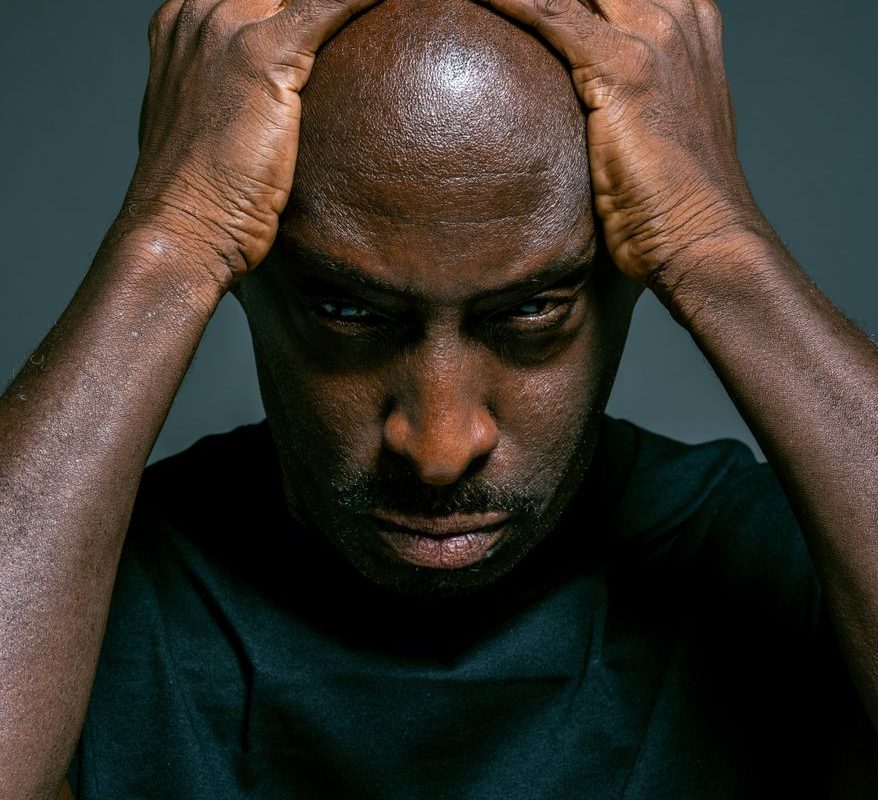
These are not fears unique to Moses; they touch all humans. Neither is Moses spiraling into the bottom of the abyss by telling God, “Please! Send anyone else.” The “what if” loop about an unknown or unpredictable future is seen in our everyday life. We worry about paying bills, debt, health, retirement, relationships, work deadlines, career or education progression etc, perhaps because we do not know how to handle ambiguous situations. Some people worry because their personalities have higher melancholic tendencies. They tend to be so sensitive about details that even if God were to give them the outcome of what was to happen, like Moses, they’d still worry.
God told Moses the sign of his deliverance was that the Israelites would worship him on Mount Sinai, where Moses had met with God. God went further and performed two miracles as a sign for the leaders of Israel and for Pharaoh; but Moses still did not believe. God even told Moses that Pharaoh would harden his heart and not let the Israelites go but God would deal with him. Moses still didn’t believe.
We can conjecture Moses wanted specific details as we see a glimpse of his personality in the details he gives in Scripture writings attributed to him. For example, he writes about the Tabernacle, describing in detail its in length, width, height, colour of fabric, who was to build it, why he was to build, who was to carry it, who was to serve in it, what to wear in it, where to stand, what to bring in it, when to bring it, what was to happen to what was brought, the Tabernacle spoons, buckets, basins, how people were to camp around it, the priests clothes including inner garments, turbans and sash and ephod…details! Even the manner of the written laws he recorded captures different scenarios of the same law like: what if there was hair on a white spot on someone’s head — were they unclean? What if the hair on the spot was yellow on the white spot? What if the spot was yellow but not the hair? What if there was no hair on the spot? This love for detail is a strength and a weakness.
We can also read between the lines of Moses’ life and see environmental factors that could have influenced his propensity to worry. As a three-month old baby, his mother gave him up to the River Nile because she was worried she couldn’t hide him any longer. Pharaoh’s daughter who picked him up from the Nile could have feared being found out by her father that she was keeping a Hebrew baby. When a person grows up in a family where anxiety is poorly managed, they are prone to a life designed by worry.
As Christians, we further cannot rule out spiritual warfare as a contributor to our anxieties. Jude tells us the archangel Michael fought with Satan over Moses’s body (Jude 1:9). Spiritual warfare is real and Satan is known to capitalize on our fears. We wage spiritual warfare through prayer and putting on the whole armour of God. Apostle Paul says in Philippians 4:6: “Don’t worry about anything; instead, pray about everything. Tell God what you need, and thank him for all he has done.
Neil T Anderson in his book The Bondage Breaker notes that, “Fear weakens us, causes us to be self-centred, and clouds our minds so that all we can think about is the thing that frightens us.” He suggests we deal with it by understanding that “God… does not want us to be mastered by anything, including fear (1 Corinthians 6:12).” Jesus is to be our only master (John 13:13; 2 Timothy 2:21).
Following Paul’s call to pray about everything, Anderson gives the following prayer that we can make from our hearts in order to begin experiencing freedom from the bondage of fear and have the ability to walk by faith in God:
“Dear heavenly Father, I confess to you that I have listened to the devil’s roar and have allowed fear to master me. I have not always walked by faith in you but instead focused on my feelings and circumstances. Thank you for forgiving me for my unbelief. Right now I renounce the spirit to fear and affirm the truth that you have not given me a spirit of fear but of power, love and a sound mind. Lord, please reveal to my mind now all the fears that have been controlling me so I can renounce them and be free to work by faith in you. I thank you for the freedom you give me to work by faith and not by fear. In Jesus’ powerful name, I pray. Amen” (2 Corinthians 4:16-18,5:7, 2 Timothy 1:7).
Anderson also gives a list of areas the devil usually uses to keep us from walking in faith, leading us to live an anxious life. Check the ones below that apply to your life and renounce them in prayer (Philippians 4:6):
- Fear of death
- Fear of Satan
- Fear of failure
- Fear of rejection by people
- Fear of disapproval
- Fear of being a homosexual
- Fear of financial problems
- Fear of never getting married
- Fear of the death of a loved one
- Fear of being a hopeless case
- Fear of losing salvation
- Fear of having committed the unpardonable sin
- Fear of not being loved by God
- Fear of never being loved by others
- Fear of embarrassment
- Fear of being victimized by crime
- Fear of marriage
- Fear of divorce
- Fear of going crazy
- Fear of pain or illness
- Fear of the future
- Fear of confrontation
- Fear of specific individuals
List other specific fears that come to mind now and pray: “I renounce the (name the fear) because God has not given me a spirit of fear. I choose to live by faith in the God who has promised to protect me and meet all my needs as I walk by faith in him.”