by
by Fidelia Munondireva lives in Kigali with her family where she works as an entrepreneur in community development and as a missionary with Tubasange, a dynamic missions group focused on training and sending missionaries across Africa through programs like Kairos and Perspectives. She also serves as an elder and discipleship teacher at Christian Life Assembly in Kigali. She spoke with Kageni Muse about their experience starting, hosting and multiplying cell groups in their church for the last 25 years, and how that initiative led to the nationwide ‘100 Days of Hope’ for Rwanda.
Kageni: How did you end up hosting your cell group?
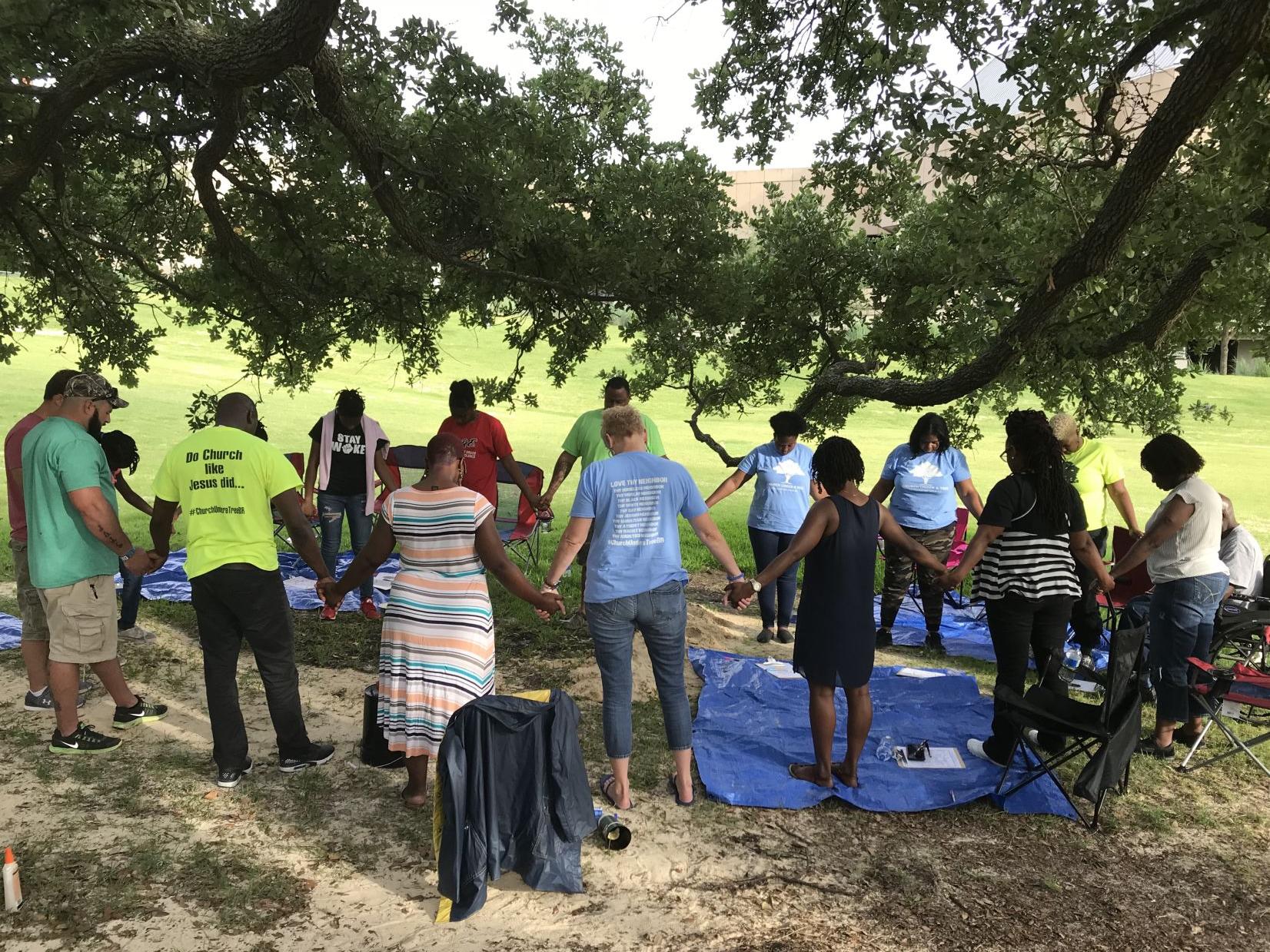
Fidelia: When I came to Rwanda, and joined the church, it was in its preliminary stage; it wasn’t a big congregation. So we came in and teamed up with missionaries who had come from Canada – PAOC Missionaries. The church didn’t have any other programs except for the Sunday Service and the Tuesday prayer meeting. The issue was that though we were few, the congregation comprised of many foreigners who had come in either to work in Kigali or do business. We felt isolated, each one on his own. So we decided — why can’t we just meet, gather together at least once in a week and just share. We can discuss the Bible, we can even choose a book that we can study. That’s how it started; it wasn’t like a home cell. Even on Sundays, after the service, as couples we would meet in someone’s home just like that. Most of the time it was my home. The couples would come, we were like five of us (couples).
Every Friday people would come, and the couples would bring potluck and we would share meals as the children played together and we would be sharing different issues and also studying the Word.
After some time the pastor got to hear that there are people who were meeting because we were becoming many. We told him what we were doing and he was like, this is a good idea — can’t we like share it with the congregation? We introduced the program to all the members and we were the ones now implementing what we knew at that particular time.
Of course, now the pastor had to look for some programs , like in Kenya, Citam, he requested the Adoyo’s to come to share with us how they do cell meetings in their church. Then we started.
Kageni: How have you maintained the consistency for many years?
Fidelia: There’s nothing really I can say we did that is complicated or sophisticated. No, just having a heart for loving people. Because most of the people that were coming to our cells after it was introduced to the whole congregation, most of them didn’t even know English. Some were not even born again, so they were coming in then we take them through the ‘Growing in Grace’ program for new believers. We would minister to them, they receive salvation along the way. Then we left that book and took up the ‘Alpha’ program. That’s how we were growing.
People would come in and the cell was having like 30 members. So after some time, like six months, we had to multiply — we had to birth new cells. And then we, you know, some of the cell members, you encourage them to open up their homes. So when they’re in agreement, if they are OK with it, they open up their homes and then we multiply.
We remained just a few of us in the original cell. We would open new cells, maybe two or three somewhere and they keep on growing and multiplying like that. It’s like a tree and branches growing and, you know, and more branches coming on other branches on other branches.
Kageni: How did you convince people to not want to remain in the mother group?
Fidelia: It’s a challenge, but you have to really sensitize people. Also we don’t allow this thing of someone coming from another zone, like in another suburb, and they have to cross the city to go to a cell because they love that cell. No, you’ve got to be in your neighborhood because God has called you in that neighborhood for a reason. You have to be in that neighborhood with the people that you fellowship with, that you live with, and also the community around you — people who are not even involved in your church, the less privileged and underserved, all sorts of pople. You have to minister to your community in different ways. So you cannot minister across the city yet you have people that are already there in your neighborhood that you know. So we encourage people all the time. It’s not easy but that’s how it is.
But we do have structures. We have zones — about 7 zones, and the zones have sections. A zone might have 16 sections and then each section has maybe like seven cells, depending on how big the section is.
Kageni: What have been the challenges of hosting people from all walks of life for all those years?
Fidelia: God has been faithful. The people we started with when I started living in Rwanda — most people didn’t have families, so when they see that there are people meeting, they are Christians and they share meals and all, they come. Here we were, sharing cakes and madazi. And that’s when we realized that we even had students among us. Some had spent like 2 days without eating. So what do we do? What I would do is I would make the cheapest meal for the day. So you welcome them. They even become part of the preparation of everything that is happening there — whether it’s preparing a meal, we prepare together. They feel at home and they eat, they drink tea. And when they go, ah, they feel good. And then on Sunday, of course, they come to church. So we we had to really open up our homes to make sure that people feel at home, to the extent that most of the doors were just open — it’s like, come, if you feel like you want to have a cup of tea, you come in, even if I’m not there, go to the kitchen and serve yourself tea from the flask. Come and sit and chat with others until the time of the meeting. So the youth would come, they will really feel at home, you’d see how relaxed they would be –just sitting there like they are home. Most of them are grown up now with their own families.

Kageni: What encouragement would you give other cell groups that are struggling, either in hosting or in leading or just consistency in meeting?
Fidelia: With cells, first and foremost, you’ve got to love people. If you are the host, the cell leader, the intern — if people come to the cell and it’s like just a duty that you are doing, that cell cannot survive. And as a cell host, if you are not willing to share your resources with people, with others, then that cell will not survive in that home of yours. Another issue — if you are a home cell host and then you go out of your way to do something that is beyond your budget, the you won’t manage. That cell will struggle.
But what I can say is — the most most important thing that can tie the cell together is love. When you show people love, you open your doors and you show them they are most welcome and you share with people what you have. And also, confidentiality. That’s another aspect of an authentic cell. When you meet, whatever you is shared in your cell, someone comes and shares with the cell, “Pray for me”, then the cell members are taking that out — that cell won’t last. Because for the person, the moment whatever they shared with their cell is out there, that’s it; they will never come back to the cell.
So it all starts with the lead team. Not the people who come. No, the lead team. You need to be structured. You need to be ready to receive people and to love them no matter their weaknesses, no matter where they are coming from or whatever they do, just love them, appreciate them, and grow together with them. The cell will grow, and multiply, and you continue growing and you impact the whole nation.
In 2002, when we had already started. we studies the Alpha book, then we studied ‘The Purpose Driven Life’ by Rick Warren. The President [Rwanda] heard that there was this church, they worship in a tent, and they have this book they study every Wednesday, and it’s a good book. And he called the pastor and said he wanted to see that book. He he read it and decided he had to contact Rick Warren. The whole nation had to read it. Rick warren’s team decided to team up with Rwandan translators, and our church led the effort. We printed books, and then we came up with ‘100 Days of Hope’ for Rwanda to try and bridge the division. We had Hillsong, Rick Warren, Joyce Meyer, and many international preachers in Kigali for that event.
It was a lot of work. We planned that for like six months. The book was printed and distributed to every neighborhood, like 10 homes together. People were given time to leave work. So by 4:00pm you leave work. Release your workers to go for the communal cell. Books were given for free. And then after that we had ’40 Days of Hope’, of reading the book through, because it’s 40 chapters. After that we started the ‘100 Days of Hope’.