 by
by By Allan Kanyesigye
The East African Revival remains one of the most significant movements of Christian renewal in the history of Ankole, Uganda. Reaching Ankole in 1936, the revival called Christians beyond nominal religious identity into a personal and transforming relationship with Jesus Christ. Its emphasis on repentance, confession, reconciliation, holiness, prayer, fellowship, evangelism and restitution produced visible changes in individuals, families and communities. Now 90 years later, an important question must be asked and answered: What has happened to the fire? Do its core convictions continue to shape the Church today?
Tending the fire
Every fire has a source, but every fire that is to remain alive must also be tended. Ninety years after the East African Revival reached Ankole in 1936, this truth invites the Church to look beyond celebration and ask a more searching question: What happened to the fire? The Revival was not simply a period of emotional religious excitement. It was an awakening to Christ that called people from nominal Christianity to repentance, holiness, reconciliation, fellowship, evangelism and visibly transformed lives. Its impact was significant. Ordinary Christians became witnesses and evangelists; families and communities were challenged; personal and social practices were confronted; and faith was brought into everyday life. Yet movements that begin with deep conviction can, over time, become institutions, traditions and inherited identities. The danger is that a generation may preserve the language, songs and structures of revival while losing the spiritual seriousness that gave them meaning. The challenge before the present generation is not to reproduce 1936 mechanically, but to recover its spiritual seriousness, live its convictions faithfully and pass the fire to the next generation. We look back not simply to admire what God did, but to ask what the Church has done with what it received—and what it will pass on.
What fire?
Fire is alive. It burns, gives light, produces heat and, when carried from one place to another, can ignite something new. But fire can also grow cold when it is no longer fed. That makes fire a fitting metaphor for understanding revival, not simply as a moment of excitement, but as a living work that must be sustained.
In the context of the East African Revival, the fire was not merely the emotional intensity of meetings, the sound of songs, or the gathering of large crowds. It was an awakening to Christ that reached into the whole of life. It called people from nominal Christianity to a faith that was personal, visible and transformative.
David Kling describes it as a powerful African conversion movement in which the Balokole or “saved ones” formed communities centred on prayer and fellowship, with repentance, confession, testimony and restitution at the heart of their Christian life. Jason Bruner takes us deeper by describing the Revival as a conversionary movement that demanded a radical break with the past: moving from spiritual “darkness” into the “light” of salvation. For the Balokole, this meant bringing hidden sin into the open, confessing it, “putting things right,” and learning to walk in the light with others. Salvation was therefore not simply something professed; it was something demonstrated in changed lives.
The fire of revival, therefore, is a deep awakening to Christ, which produces repentance, holiness, reconciliation, fellowship, witness and a transformed way of life. The Revival did not simply change what people sang on Sunday; it changed how they lived on Monday. And that is the fire we must examine as we look back over 90 years in Ankole.
Its source
The revival that became so deeply identified with the spiritual life of Ankole was part of a wider movement of renewal that was already stirring in East Africa in the early 1930s. Its roots are associated with the encounter between the Ugandan Christian leader Simeoni Nsibambi and the British missionary and medical doctor Joe Church. Their growing concern was not simply about increasing the number of church members, but about the quality and reality of Christian life. They were asking whether people who called themselves Christians were actually living as people transformed by Christ.
The movement found particularly fertile ground at Gahini in Rwanda. From there, it spread to Kigezi still in Rwanda in 1935 and then reached Ankole in 1936. Ankole Diocese itself records 1936 as the year of the emergence of the East African Revival, describing its impact in terms of renewed lay leadership, religious fervour and missionary zeal.
But the arrival of the revival in Ankole has a story that is almost too ordinary to have become so historically significant. Toward the end of 1935, Joe Church travelled from Gahini towards Mbarara. His journey took an unexpected turn when he was unable to obtain spare parts for his vehicle. He was hosted at St. James Cathedral, Ruharo. What appeared to be an interruption in a journey became, in the providence of God, an important moment in the history of Ankole. While at Ruharo, Church was asked to send evangelists from Gahini to preach and minister to clergy and evangelists in Ankole.
On January 8, 1936, Blasio Kigozi, Paul Gahunde and Yosiya Kinuka arrived from Gahini. They conducted a week of prayer and preaching. That week became one of the defining moments in the story of revival in Ankole because this would grow into a movement that would touch churches, families, communities and the moral life of the region.
The evangelists did not arrive with a new denomination. They did not introduce Christianity to Ankole for the first time; Christianity had already been present in the region for decades. The first Baganda teachers had introduced Christianity to Ankole in 1899, and the Church had gradually established itself in the region. By 1904, the first group of indigenous Banyankole had been commissioned as evangelists.
Walking in the light
The revival, therefore, came not simply to establish Christianity, but to awaken Christians. The central cry of the Revival was a return to the reality of salvation in Jesus Christ. The movement became known as Balokole —“the saved ones”— and its spirituality placed strong emphasis on personal conversion, repentance, confession of sin, holiness and a life visibly transformed by the gospel. Revivalists spoke about “walking in the light,” a phrase that captured the conviction that genuine salvation should produce openness, honesty and changed behaviour. If someone had stolen, they were expected to make restitution. If someone had wronged another person, reconciliation was required. If there was dishonesty, it had to be confronted. If there was sexual immorality, drunkenness or other behaviour inconsistent with Christian discipleship, the gospel demanded change. The message was not simply, “Come to church.” It was, “Come into the light.”
The revival was born out of a conviction that salvation was real, that sin had to be confronted, that Christ had to be preached, that Christians had to walk in the light, and that the gospel had to produce visible transformation. It insisted that Christianity was more than belonging to a church. A person had to encounter Christ personally. The fire, therefore, was not merely emotional excitement. It was was a renewed insistence that Jesus Christ must not merely be named; He must be followed.
The language of being “saved” was not intended to describe membership on a church register but a personal experience of repentance, faith and new life. The Balokole became known for their emphasis on confession, testimony, fellowship and restitution. If someone had wronged another person, reconciliation was not optional. This made the revival intensely practical. It took the gospel out of the church building and placed it in the home, the workplace,the marketplace and the community. The fire produced people whose faith could be seen and that was revolutionary.
One of the most distinctive features of the revival was its insistence that people should not simply confess their sins to God while ignoring the people they had hurt. The cross had implications for human relationships. A person who had cheated another could not simply sing louder in church. A person who had wronged a neighbour could not hide behind religious language. A person who had damaged a relationship was called to seek reconciliation. In this way, the revival attacked something that remains one of the greatest enemies of Christian witness — the separation between what we profess and how we treat other people. The fire taught that salvation should be visible in relationships.
The revival confronted behaviours that were damaging individuals and families. Alcohol abuse, adultery, dishonesty, tobacco use, superstition and other practices were challenged. The gospel was presented not merely as something that could comfort a person after death but as something that should transform how a person lived today. Recent historical reflections on the Ankole revival have particularly highlighted its confrontation with drunkenness, adultery, tobacco use, superstition, dishonesty and unhealthy social practices, alongside its encouragement of education, discipline, hygiene and responsible Christian living.
That moral seriousness became part of the movement’s public witness. Indeed, during the recent 90th anniversary celebrations, Uganda President Yoweri Museveni acknowledged the revival’s contribution to confronting alcoholism, adultery, dishonesty, poor hygiene, superstition and harmful social practices while promoting discipline and responsible Christian living. This is significant because it reminds us that revival was never intended to be an escape from society. It was supposed to make people better neighbours, better parents, more honest workers, more faithful spouses and more responsible citizens.
Rise of lay leadership
Some clergy, civil servants and officials resisted it. Its insistence on public confession, radical honesty and personal transformation could be uncomfortable, particularly where religious respectability had become detached from personal holiness. The movement could be demanding because it did not allow people easily to hide behind their position, education, wealth, title or religious identity. Historical accounts indicate that tensions between revivalists and sections of church leadership were real, although the relationship gradually became more harmonious.
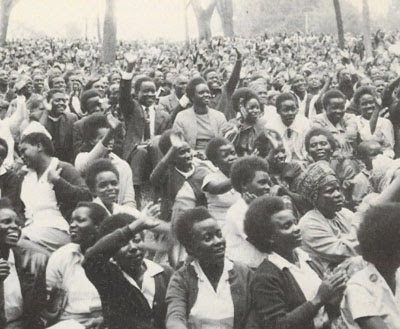
By the 1950s the Revival had become deeply integrated into Anglican Church life. It was not carried only by Bishops and priests. Ordinary African Christians became evangelists. Lay people became witnesses. Men and women travelled, prayed, preached, testified and invited others into a deeper experience of Christ.
The movement’s strength came in significant measure from ordinary African Christians who believed that the gospel had to become visible in everyday life. One person encountered Christ and told another. A family was changed. A fellowship was transformed. A community heard a testimony. A young person discovered a new purpose. A Christian who had been content with religious identity began to take discipleship seriously. The movement multiplied because those who had been touched by it became carriers of what they had experienced. This is one of the reasons the revival left such a deep mark on Ankole.
The revival did not leave ministry entirely in the hands of ordained clergy. Ordinary Christians became witnesses, evangelists, prayer leaders and carriers of the gospel. Fellowships became places where believers encouraged one another, testified about what God had done and challenged one another to remain faithful. Ankole Diocese specifically identifies the emergence of lay leadership and missionary zeal among the enduring effects of the revival. Because when a movement depends entirely on a few powerful leaders, it can easily die when those leaders disappear. But when ordinary believers become carriers of the message, the fire can travel much further than the pulpit. The revival multiplied witnesses.
Evangelistic passion
Those who believed they had encountered Christ did not keep the experience to themselves. They told others. The movement therefore became a missionary movement. Its members went beyond the walls of the church to share the gospel with relatives, friends, neighbours, schools and communities. The question was not simply, “Have I been saved?” It was also, “Who else needs to hear about Jesus?”
The revival understood something that the modern Church sometimes forgets — people need more than a Sunday service. They need people who know them and can challenge them. They need people who can pray with them and ask them difficult questions. They need people who can celebrate their victories and walk with them through failure.
This missionary impulse helped the revival move across geographical and social boundaries. The revival understood something that the modern Church sometimes forgets — people need more than a Sunday service. They need people who know them. They need people who can challenge them. They need people who can pray with them. They need people who can ask difficult questions. They need people who can celebrate their victories and walk with them through failure. The fellowship structures associated with the Balokole helped create precisely this kind of community. The revival did not simply produce converts. It sought to produce disciples. And discipleship, when taken seriously, eventually produces social consequences.
Historical reflections on the Balokole have associated revival values such as saving, discipline, hard work and responsible family life with increased educational opportunities and social mobility. It cultivated a moral and social environment in which education, discipline, hard work, responsibility and service could flourish. The fire therefore produced more than passionate Christians. It helped produce people who believed that their faith should make a difference in the way they lived and contributed to society. And perhaps this is why the memory of the revival remains so powerful in Ankole.
What happened to the fire?
The Revival began as a movement of spiritual renewal. It was dynamic, relational and deeply personal. People were converted, confessing their sins, reconciling with one another, sharing their testimonies and carrying the gospel into their communities. Over time, the Revival became deeply integrated into the established life of the Church. This was not necessarily a bad thing. Institutions provide continuity, preserve teachings, create structures for ministry, train leaders and help pass faith from one generation to another. But institutions can also create comfort. The next generation should not eject institutions but ensure that structures remain servants of the mission rather than substitutes for it. The Church needs buildings, dioceses, programmes, committees and organisations. But none of these can produce revival by themselves. The next generation must learn that a well-organised church is not necessarily a spiritually alive church. We must therefore preserve the structures without allowing the structures to extinguish the spirit that created them.
Perhaps one of the greatest dangers to any revival is that the children of revival begin to inherit what their parents personally experienced. The first generation had to encounter Christ, the next generation can simply inherit the testimony. The first generation had to make a personal decision to follow Christ. The next generation may grow up assuming that Christianity is part of the family identity. The first generation spoke about what God had done to them. The next generation may learn to repeat the same testimonies. This creates a subtle danger: we can inherit the language of salvation without experiencing the transformation of salvation. The next generation should not be told merely, “Our grandparents were Balokole.” They need to be challenged to ask, “What does it mean for me to follow Christ today?”. They must encounter Christ for themselves, develop their own prayer life, wrestle honestly with Scripture, learn to repent, make decisions about holiness, and discover their own calling to serve. Faith must be transferred, but it must also become personal. We cannot give our children our relationship with God. We can give them an environment in which they can encounter Him, but they must respond for themselves.
Costly discipleship to religious familiarity
The early Revival called for costly and demanding discipleship. It does not allow a person to separate Sunday from Monday, worship from work, or faith from character. But over time, religious practices became familiar, we became accustomed to worship without being transformed by worship, we hear sermons without allowing the Word to examine our lives, we attend fellowships without being accountable to anyone, we know the language of holiness without practising holiness, we became very familiar with Christianity while remaining spiritually shallow. It is a danger that every Christian generation faces. The next generation should know that discipleship must remain deeper than church attendance. The Revival reminds us that Christianity is not merely information to be learned or an identity to be worn. It is a life to be lived.
The generation that received the Revival in the 1930s lived in a different world from the generation growing up today. The temptation is therefore to assume that preserving the Revival means reproducing the exact practices of the past. But today’s Christian is navigating different challenges. The next generation needs the same depth of conviction expressed faithfully within a new context. The young Christian today may need to learn what walking in the light means in relation to social media, online relationships, pornography, digital deception, academic dishonesty, financial pressure, workplace corruption and the pursuit of status. The early Revival asked Christians to live differently from the surrounding culture and so the next generation must do the same.
Another challenge facing the modern Church is the temptation to measure spiritual health by activity. We count services, conferences, fellowships, missions, worship nights, seminars and attendance figures, and while these activities have their place, activity is not the same as transformation. A church can become increasingly busy without necessarily becoming spiritually deeper. We can organise a revival meeting without experiencing revival, hold a prayer conference without becoming people of prayer, organise evangelism programmes without developing a culture of personal witness, and conduct discipleship seminars without actually making disciples. The early Revival challenges this tendency because it was not simply an event people attended; it became a way of life they shared. People walked together, confessed their sins to one another, prayed together, challenged one another, carried one another’s burdens, shared their testimonies and held each other accountable. The fire was sustained not by programmes alone, but by transformed people living out their faith together. The lesson for the next generation is therefore profound — we must stop measuring revival merely by how much we organise and begin measuring it by how deeply people are being transformed. The Church does not need more activities for activity’s sake; it needs communities where people encounter Christ, grow in holiness, walk in the light and help one another live faithfully for Him. Do not measure the health of the Church only by how much it does. Measure it by what kind of people it is producing.
Have we passed on the fire?
Across Ankole and beyond, there are young Christians who genuinely love Christ, serve faithfully, lead fellowships, engage in evangelism and desire to make a difference in their communities. This is evidence that the fire has not disappeared. But the Church must be careful not to speak only about young people rather than with them and to them. The next generation cannot simply be invited to admire the Revival. They must be invited to carry it.
This requires intentional discipleship, mentoring and intergenerational fellowship. Older Christians have something the younger generation desperately needs: memory, experience, wisdom and spiritual heritage. Younger Christians also have something the older generation needs: energy, creativity, new questions and access to spaces where the Church may have limited influence.
The future should therefore not be a competition between generations. It should be a passing ofthe torch. The older generation must be willing to pass it, and the younger generation must be willing to receive it. But both generations must ensure that the flame remains centred on Christ. Methods, songs and institutions may change, but the call to repentance, holiness, prayer, Scripture, evangelism and faithful discipleship must remain.
The fire is not dead
We should resist the temptation to conclude that the Revival is simply dead. There are still Christians who pray, people who repent, families seeking to follow Christ, young people answering God’s call, churches preaching the gospel and believers serving others with integrity. The fire is not dead. But every fire that is to remain alive must be tended. It must be fed, protected and carried carefully from one generation to another. This is one of the greatest lessons of 90 years of Revival history. The question is not simply whether God sent fire to Ankole in 1936. The historical evidence tells us that He did. The question is what each generation has done with the fire it received.
History therefore must lead us to responsibility. What will our generation hand over? Will we leave behind stories of what God once did, or a living faith that demonstrates what God is still doing? The future of the Revival will not be determined by how beautifully we celebrate its past, but by how faithfully we live its convictions today.Do not merely inherit the fire. Know the Christ who lit it. Tend the flame. Live its message. And pass it on.
Rev Allan Kanyesigye serves with the Church of Uganda, Ankole Diocese.