 by
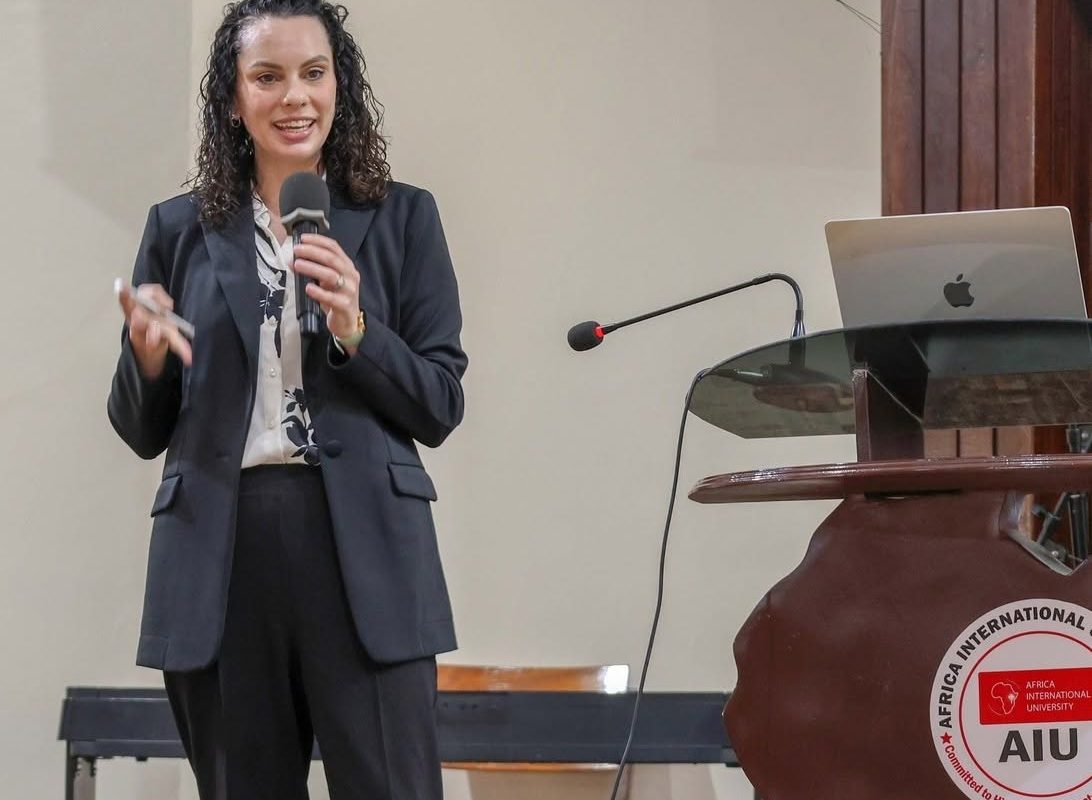
by What can African Christianity give the world? That was the title of a recent public lecture delivered by Dr Gina Zurlo at the Africa International Univerity. Dr Zurlo is a researcher and lecturer in World Christianity at the Harvard Divinity School and edits the World Christian Encyclopedia, which publishes comprehensive data and analysis on membership statistics for major world religions and Christian denominations, including historical data and projections of future populations.
These are some of the insights I got from Dr Zurlo’s presentation that should begin conversations on the role Africa can play in world Christianity: Although one third of the world is Christian, 69 per cent of these Christians are found in the global south – that’s Africa, Latin America and the Carribean, Asia and Oceania. This number is projected to grow to 80 per cent by 2075. Dr Zurlo noted that at least 50 per cent of the Christian future will be African (and possibly female). Contrast that with the fact that in 1900, 60 per cent of Christians were Europeans, and that a 1910 missions conference held in Edinburg, Scotland, saw Africa as unimportant for the future of the World church, considering African too primitive to receive Christianity!
A second interesting observation was that globally, the fastest growing churches are non-traditional house churches and Pentecostal/charismatic churches, while many of the traditional mainline churches are shrinking. Catholics represent half of all Christians globally. However, in Africa, the fastest growing denominations include Latter Day Saints, Holiness churches, Adventists, Baptists and charismatics.
Muslims are projected to outnumber Christians by 2075, by sheer birthrates. To keep up, Dr Zurlo stated, Christianity would have to keep up with a commensurate conversion rate.
The researcher noted that African agency has been the greatest factor in the expansion of Christianity in Africa in the last 100 years or so, with the biggest contributions coming from the prophet-healing movements, African independent churches, vernacularization of Christianity and scripture, contributions of African theologians, the African spirit of vibrancy and creativity and women’s penetration of the church in Africa. Dr Zurlo rightly noted that African Christianity has a women face.
Dr Zurlo raised a concern about the lack of consumption of indigenous theology by the church in the global south, which Bishop Oscar Muriu of Nairobi Chapel saw as lingering legacy of Western colonization and empire. While giving the example of a nascent church in Asia, Dr Zurlo chastised that it can’t be that the only theologians trusted by those in the Global South are white men from the US. Which African theologians are we reading or listening to? Which female theologians do we interact with?
Bishop Muriu noted that the African church struggles to disinvest itself from the West and this is seen in the colonial relics in our theology, church buildings, church garb, hymnology, mission strategy and funding mechanisms. “Liberation has not yet come into our theology,” Bishop Oscar said while calling for a level playing field in World Christianity spaces where Africa can speak with its own unique voice. “Africa has been invited into the room but it does not have a seat at the table. The mission table is still rectangular with a head and a tail, in the model of ‘From the West to the Rest’.”
He called for a mindset that considers the global church as one reciprocal body, whether in Europe, Asia, the Americas or Africa, patterned after Paul’s words in 1 Cor 12:12-27. “We need each other; we are all one body,” he said.
While responding to the lecture, Bishop Calisto Odede of Christ is the Answer Ministries had a concern that discipleship in Africa was not keeping pace with evangelism. Bishop Muriu had made a similar observation, warning that we should not mistake the vibrancy of the African church for true faith. “We have Christianized the population of Africa but have not made disciples,” he warned. Bishop Odede emphasized the need for deeper spiritual formation of those who come to faith and for church-based theological education to plug the gap of untrained pastors.